Artificial grass is famous for being low maintenance—but low maintenance is not the same as no maintenance. A simple care routine keeps your lawn clean, upright, odor-free, and safe, while helping your turf last 15–20 years (or more in low-wear areas).
This guide explains the essential tasks, the most common issues people face, and the best practices to prevent them—without wasting time or using harsh chemicals.
Quick Summary: What Artificial Grass Needs (and Doesn’t Need)
Artificial grass does NOT need:
-
mowing
-
fertilizing
-
reseeding
-
daily watering
Artificial grass DOES need:
-
debris removal (to prevent staining and algae)
-
occasional brushing (to keep fibers upright)
-
rinsing (especially for pets and dust)
-
basic inspections (edges, seams, drainage)
Good news: Most maintenance takes 5–10 minutes per week.
Why Maintenance Matters (Even for “Low-Maintenance” Turf)
Artificial grass is designed to withstand outdoor conditions, but neglect can create problems such as:
-
flattened or matted blades
-
unpleasant pet odors
-
algae/moss growth in damp areas
-
clogged drainage and puddling
-
stained or dirty-looking turf
-
infill displacement (for infill systems)
Most of these issues are preventable with light, consistent care.
1) Remove Debris Regularly (Leaves, Dust, Twigs)
Debris is the #1 reason artificial lawns start looking “old.”
Why it matters
-
Leaves and organic debris break down and can stain fibers
-
Decomposing material encourages moss/algae
-
Sharp objects can damage backing or seams
-
Debris mats the turf and makes it look flat
Best routine (simple + effective)
Weekly
-
Use a leaf blower to clear loose debris
-
Pick up larger items by hand
As needed
-
Use a plastic rake or a turf rake for heavy leaf fall
Avoid
-
metal garden rakes (can cut or pull fibers)
-
stiff wire brushes
-
leaving piles of wet leaves for days
Tip: If your area has seasonal leaf fall, debris removal matters more than brushing.
2) Rinse to Prevent Dust Buildup and Keep Turf Fresh
Over time, airborne dust and dirt settle into the turf surface. In dry climates this is common.
When to rinse
-
after storms or strong wind
-
after BBQ parties or outdoor gatherings
-
in dusty areas (construction nearby, desert climate)
-
in pet zones (at least weekly)
How to rinse correctly
-
Use a garden hose with normal pressure
-
Rinse in sections until water runs clear
Can you use a pressure washer?
Yes, but carefully:
-
use low pressure
-
keep the nozzle at a safe distance
-
avoid blasting seams or edges
-
avoid removing infill
If you need deep cleaning, it’s often better to use specialized turf cleaning equipment (especially for larger areas).
3) Brush the Turf to Keep Blades Upright (Prevent Matting)
Foot traffic naturally pushes fibers down. Brushing restores the “new lawn” look.
Benefits of brushing
-
lifts blades upright
-
reduces permanent matting
-
redistributes infill (if present)
-
improves appearance and softness
How often should you brush?
-
high-traffic areas: every 2–4 weeks
-
low-traffic areas: every 2–3 months
-
after events / parties: brush once after cleanup
Best tools
-
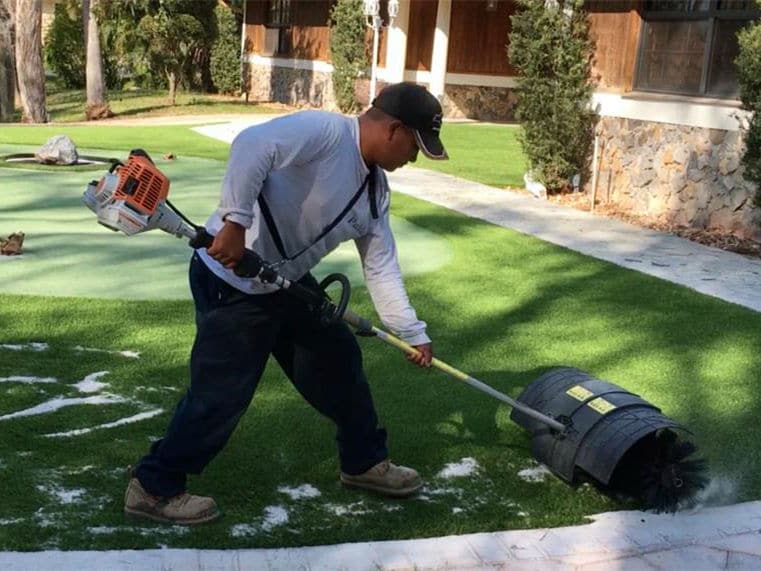
a stiff push broom (nylon bristles)
-
a specialized turf brush
-
a power broom for larger lawns
Proper technique
-
brush against the grain (opposite of the fiber lean)
-
brush in multiple directions for best lift
Avoid metal bristles or harsh industrial brushes that can damage yarn.
4) Prevent and Remove Stains (Food, Oil, Rust, Pool Chemicals)
High-quality turf is stain resistant, but stains can still happen—especially if spills sit too long.
First response (most stains)
-
remove solids carefully
-
blot liquids (do not rub)
-
rinse with water
For oily or sticky spills
-
use mild dish soap diluted in water
-
gently scrub with a soft cloth or sponge
-
rinse thoroughly
Common stain sources to watch
-
wine, coffee, soda
-
sunscreen and body oils
-
cooking grease
-
paint / glue
-
rust from outdoor furniture
-
pool chemicals
Important: Avoid harsh solvents unless recommended by the manufacturer.
5. Pet Waste Maintenance (Odor Prevention, Not Just Cleaning)
Artificial grass is pet-friendly—but pet areas still require proper rinsing to prevent odor buildup.
Solid waste
-
Remove promptly
-
Rinse the area after pickup if needed
Urine
-
Urine drains through the turf, but urine salts can accumulate in the infill over time, causing persistent odors
Best practices
-
Rinse pet areas with water regularly
-
In hot weather or heavy use, rinse more often
If odor appears, try one of the following:
Option A: Vinegar Solution
-
Mix 1:1 white vinegar + water
-
Apply to the affected area
-
Wait 10–15 minutes
-
Rinse thoroughly
Option B: Enzyme Cleaner (Recommended)
-
Use a pet enzyme cleaner designed for artificial turf
-
Follow the product label instructions
Option C: Turf Deodorizer
-
Apply monthly for areas with heavy pet use
Tip: Odors are usually caused by bacteria in the infill layer. Enzyme cleaners work because they break down the source of the smell, not just mask it.
For more detailed solutions, including baking soda, specialized cleaning agents, and pet-friendly turf features, see our dedicated article:
Pet Urine on Artificial Grass and How to Remove the Smell
6) Prevent Heat Problems (Cooling + Melt Risk)
Artificial grass can feel hot under direct sun—similar to patios, decks, or sand.
Cooling the surface
-
spray with a hose for quick cooling
-
add shade (umbrellas, pergola, shade sail)
Prevent permanent heat damage
Artificial turf can melt if exposed to high heat sources.
Never place directly on turf
-
grills
-
fire pits
-
hot charcoal
-
fireworks
-
cigarettes
Watch out for reflected sunlight
Some modern windows (especially low-E glass) can reflect concentrated sunlight and create hot spots strong enough to melt turf fibers.
If you see scorched patches:
-
identify reflection source
-
add external shading or window film/screens
7) Inspect Edges, Seams, and Drainage (Small Checks Prevent Big Repairs)
A quick inspection helps catch problems early.
Monthly inspection checklist
-
are any edges lifting?
-
are seams separating?
-
is infill low in certain spots?
-
are there drainage issues (puddles)?
If you notice lifting edges or seam gaps, fix early before traffic worsens it.
Common Problems and How to Prevent Them
Problem: Turf looks flat / matted
Cause: heavy foot traffic, infill migration, lack of brushing
Fix: brush against grain + redistribute infill
Problem: Bad smell in pet areas
Cause: urine salts and bacteria buildup
Fix: rinse schedule + enzyme cleaner + deodorizer
Problem: Green film / slippery surface
Cause: algae in damp/shaded areas + debris buildup
Fix: remove debris + rinse + improve sunlight/airflow
Problem: Puddles or slow drainage
Cause: clogged drainage layer or poor base
Fix: remove debris, inspect drainage, consult installer if persistent
Problem: Melted patches
Cause: fire/embers or window reflection
Fix: remove heat source + replace damaged turf section
Recommended Artificial Grass Maintenance Schedule (Simple & Realistic)
Weekly (5–10 minutes)
-
blow off leaves/debris
-
pick up pet waste
-
rinse pet zones or dusty areas
Monthly (20–40 minutes)
-
brush high-traffic areas
-
rinse and spot clean stains
-
inspect seams/edges
Quarterly (1–2 hours)
-
brush entire lawn
-
deep clean surface (hose + mild cleaner if needed)
-
check infill levels (if applicable)
-
inspect drainage outlets
What NOT to Do (Mistakes That Shorten Turf Life)
Avoid:
-
metal rakes
-
wire brushes
-
harsh chemicals (bleach, petroleum solvents)
-
high-pressure washing at close distance
-
placing grills/fire pits directly on turf
-
letting leaves sit wet for long periods
-
ignoring seam lifting until it becomes a tear
Final Thoughts: Low Maintenance, High Reward
Artificial grass is a long-term investment. With a simple routine—mainly debris removal, occasional brushing, and pet-area rinsing—you can prevent nearly all common turf problems.
Consistency is the secret.
A few minutes per week keeps your turf looking clean and upright for years.
FAQ
How often should artificial grass be brushed?
Most lawns benefit from brushing every 1–3 months, while high-traffic areas may need brushing every 2–4 weeks.
Can I pressure wash artificial grass?
Yes, but use low pressure, keep distance, and avoid seams/edges. High pressure can damage fibers and remove infill.
How do I stop artificial grass from smelling with pets?
Rinse regularly, use enzyme cleaner when needed, and consider a turf deodorizer for heavy pet use.
Does artificial grass need watering?
Not for growth—only for cleaning, cooling, and pet odor control.