














Cỏ nhân tạo nổi tiếng vì ít cần bảo dưỡng—nhưng Ít bảo trì không đồng nghĩa với không cần bảo trì.. Một quy trình chăm sóc đơn giản sẽ giúp bãi cỏ của bạn sạch sẽ, thẳng tắp, không có mùi hôi và an toàn, đồng thời giúp thảm cỏ bền lâu. 15–20 năm (hoặc nhiều hơn ở những khu vực ít bị mài mòn).
Hướng dẫn này giải thích các nhiệm vụ thiết yếu, những vấn đề phổ biến nhất mà mọi người gặp phải và các biện pháp tốt nhất để ngăn ngừa chúng—mà không lãng phí thời gian hoặc sử dụng hóa chất mạnh.
Mục lục
- Tóm tắt nhanh: Cỏ nhân tạo cần (và không cần) gì?
- Tại sao việc bảo trì lại quan trọng (ngay cả đối với loại cỏ "ít cần bảo trì")
- 1) Thường xuyên dọn dẹp rác thải (lá cây, bụi bẩn, cành cây)
- 2) Rửa sạch để ngăn ngừa bụi bám và giữ cho thảm cỏ luôn tươi mới.
- 3) Chải thảm cỏ để giữ cho các ngọn cỏ thẳng đứng (ngăn ngừa cỏ bị xẹp xuống)
- 4) Ngăn ngừa và loại bỏ vết bẩn (Thức ăn, dầu mỡ, rỉ sét, hóa chất hồ bơi)
- 6) Ngăn ngừa các vấn đề về nhiệt (Nguy cơ làm mát + chảy nhựa)
- 7) Kiểm tra các cạnh, đường nối và hệ thống thoát nước (Kiểm tra nhỏ giúp tránh những hư hỏng lớn)
- Các vấn đề thường gặp và cách phòng ngừa
- Lịch trình bảo dưỡng cỏ nhân tạo được đề xuất (Đơn giản & Thực tế)
- Những điều KHÔNG NÊN làm (Những sai lầm làm giảm tuổi thọ thảm cỏ)
- Tóm lại: Ít tốn công chăm sóc, hiệu quả cao.
- Câu hỏi thường gặp
Tóm tắt nhanh: Cỏ nhân tạo cần (và không cần) gì?
Cỏ nhân tạo KHÔNG cần:
cắt cỏ
bón phân
gieo hạt lại
tưới nước hàng ngày
Cỏ nhân tạo CẦN:
Loại bỏ mảnh vụn (để ngăn ngừa vết bẩn và tảo)
thỉnh thoảng chải lông (để giữ cho sợi lông thẳng đứng)
xả nước (đặc biệt là đối với thú cưng và bụi bẩn)
Kiểm tra cơ bản (các cạnh, đường nối, hệ thống thoát nước)
Tin vui: Hầu hết các công việc bảo trì đều diễn ra 5-10 phút mỗi tuần.
Tại sao việc bảo trì lại quan trọng (ngay cả đối với loại cỏ "ít cần bảo trì")
Cỏ nhân tạo được thiết kế để chịu được điều kiện ngoài trời, nhưng sự thiếu chăm sóc có thể gây ra các vấn đề như:
lưỡi dao bị dẹt hoặc bết dính
mùi hôi khó chịu của thú cưng
tảo/rêu phát triển ở những khu vực ẩm ướt
cống bị tắc và đọng nước
cỏ bị ố hoặc trông bẩn
sự dịch chuyển vật liệu lấp đầy (đối với hệ thống vật liệu lấp đầy)
Hầu hết các vấn đề này đều có thể phòng ngừa được bằng cách chăm sóc nhẹ nhàng và đều đặn.
1) Thường xuyên dọn dẹp rác thải (lá cây, bụi bẩn, cành cây)
Rác thải là nguyên nhân chính khiến cỏ nhân tạo bắt đầu trông "cũ kỹ".“
Tại sao điều đó lại quan trọng
Lá cây và các chất hữu cơ phân hủy và có thể sợi nhuộm
Vật liệu phân hủy khuyến khích rêu/tảo
Vật sắc nhọn có thể làm hỏng lớp lót hoặc đường may.
Các mảnh vụn bám đầy trên thảm cỏ và làm cho nó trông bằng phẳng.
Quy trình tốt nhất (đơn giản + hiệu quả)
Hàng tuần
Sử dụng máy thổi lá để dọn sạch các mảnh vụn rời rạc
Tự tay nhặt những vật dụng lớn hơn.
Khi cần thiết
Sử dụng cào nhựa hoặc cào cỏ để xử lý lá rụng nhiều.
Tránh xa
Cào vườn bằng kim loại (có thể cắt hoặc kéo sợi)
bàn chải dây cứng
để lại những đống lá ướt trong nhiều ngày.
Mẹo: Nếu khu vực của bạn có hiện tượng lá rụng theo mùa, việc dọn dẹp lá rụng quan trọng hơn việc quét dọn bằng cây cối.
2) Rửa sạch để ngăn ngừa bụi bám và giữ cho thảm cỏ luôn tươi mới.
Theo thời gian, bụi bẩn trong không khí sẽ lắng đọng xuống bề mặt cỏ. Điều này khá phổ biến ở những vùng khí hậu khô hạn.
Khi nào nên xả nước
sau bão hoặc gió mạnh
sau các bữa tiệc nướng BBQ hoặc các buổi tụ họp ngoài trời
ở những khu vực nhiều bụi (công trình xây dựng gần đó, khí hậu sa mạc)
trong khu vực dành cho thú cưng (ít nhất mỗi tuần)
Cách xả nước đúng cách
Sử dụng vòi tưới vườn với áp suất bình thường
Rửa từng phần cho đến khi nước trong.
Bạn có thể sử dụng máy rửa áp lực không?
Vâng, nhưng cần cẩn thận:
sử dụng áp suất thấp
Giữ vòi phun ở khoảng cách an toàn.
tránh nổ mìn các đường nối hoặc cạnh
tránh loại bỏ vật liệu lấp đầy
Nếu cần làm sạch sâu, thường thì nên sử dụng... thiết bị làm sạch cỏ chuyên dụng (đặc biệt là đối với các khu vực lớn hơn).
3) Chải thảm cỏ để giữ cho các ngọn cỏ thẳng đứng (ngăn ngừa cỏ bị xẹp xuống)
Việc đi lại tự nhiên sẽ làm cho các sợi cỏ bị xẹp xuống. Chải cỏ sẽ khôi phục lại vẻ ngoài "mới" của bãi cỏ.
Lợi ích của việc đánh răng
nâng các cánh quạt lên thẳng đứng
giảm tình trạng vón cục vĩnh viễn
Phân bổ lại vật liệu lấp đầy (nếu có)
cải thiện vẻ ngoài và độ mềm mại.
Bạn nên đánh răng bao nhiêu lần một tuần?
khu vực giao thông đông đúc: cứ sau 2-4 tuần
khu vực giao thông thấp: cứ 2-3 tháng một lần
sau các sự kiện/bữa tiệc: Chà lại một lần sau khi dọn dẹp.
Công cụ tốt nhất
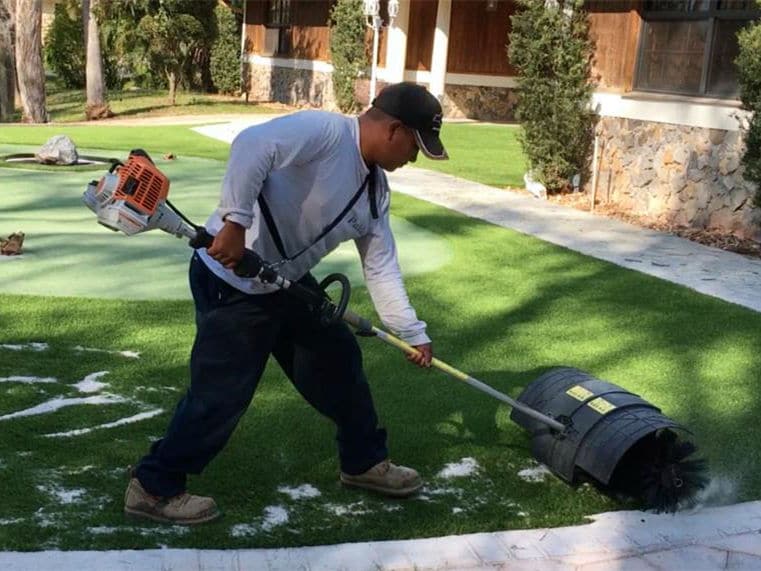
a chổi đẩy cứng (lông chổi bằng nylon)
một bàn chải cỏ chuyên dụng
máy quét đường dùng cho những bãi cỏ rộng lớn
Kỹ thuật đúng
chải trái với lẽ thường (ngược lại với sự gầy yếu của chất xơ)
chải vào nhiều hướng để nâng cao tốt nhất
Tránh sử dụng bàn chải có lông bằng kim loại hoặc bàn chải công nghiệp cứng vì chúng có thể làm hỏng sợi len.
4) Ngăn ngừa và loại bỏ vết bẩn (Thức ăn, dầu mỡ, rỉ sét, hóa chất hồ bơi)
Loại cỏ nhân tạo chất lượng cao có khả năng chống bám bẩn, nhưng vết bẩn vẫn có thể xuất hiện—đặc biệt nếu chất lỏng bị đổ để quá lâu.
Phản ứng đầu tiên (đối với hầu hết các vết bẩn)
loại bỏ chất rắn một cách cẩn thận
Thấm khô chất lỏng (không chà xát)
rửa sạch với nước
Dùng cho các vết dầu mỡ hoặc dính.
sử dụng nước rửa chén nhẹ pha loãng trong nước
Chà nhẹ nhàng bằng khăn mềm hoặc miếng bọt biển.
rửa sạch kỹ lưỡng
Các nguồn gây vết bẩn phổ biến cần lưu ý
rượu vang, cà phê, nước ngọt
kem chống nắng và dầu dưỡng thể
mỡ nấu ăn
sơn/keo
rỉ sét từ đồ nội thất ngoài trời
hóa chất hồ bơi
Lưu ý quan trọng: Tránh sử dụng các dung môi mạnh trừ khi có khuyến cáo của nhà sản xuất.
5. Xử lý chất thải của thú cưng (Ngăn ngừa mùi hôi, không chỉ đơn thuần là làm sạch)
Cỏ nhân tạo thân thiện với thú cưng—nhưng khu vực dành cho thú cưng vẫn cần được rửa sạch đúng cách để tránh tích tụ mùi hôi.
Chất thải rắn
Loại bỏ ngay lập tức
Nếu cần, hãy rửa sạch khu vực đó sau khi thu gom rác.
Nước tiểu
Nước tiểu sẽ thoát qua lớp cỏ, nhưng các muối trong nước tiểu có thể tích tụ trong lớp vật liệu lấp đầy theo thời gian, gây ra mùi hôi dai dẳng.
Thực tiễn tốt nhất
Thường xuyên rửa sạch khu vực nuôi thú cưng bằng nước.
Trong thời tiết nóng hoặc khi sử dụng nhiều, hãy xả nước thường xuyên hơn.
Nếu xuất hiện mùi khó chịu, hãy thử một trong những cách sau:
Phương án A: Dung dịch giấm
Trộn giấm trắng và nước theo tỷ lệ 1:1.
Thoa lên vùng da bị ảnh hưởng.
Chờ 10-15 phút
Rửa sạch kỹ
Phương án B: Chất tẩy rửa enzyme (Khuyến nghị)
Hãy sử dụng chất tẩy rửa enzyme dành cho thú cưng, được thiết kế cho thảm cỏ nhân tạo.
Hãy làm theo hướng dẫn trên nhãn sản phẩm.
Phương án C: Chất khử mùi cỏ
Áp dụng hàng tháng cho các khu vực có nhiều người nuôi thú cưng.
Mẹo: Mùi hôi thường do vi khuẩn trong lớp vật liệu lấp đầy gây ra. Chất tẩy rửa enzyme có tác dụng vì chúng... Phân tích nguồn gốc của mùi, Không chỉ che đậy nó.
Để biết thêm thông tin chi tiết về các giải pháp, bao gồm: bột nở, chất tẩy rửa chuyên dụng và các tính năng thân thiện với vật nuôi trên sân cỏ., Xem bài viết chuyên dụng của chúng tôi:
Nước tiểu thú cưng trên cỏ nhân tạo và cách khử mùi hôi
6) Ngăn ngừa các vấn đề về nhiệt (Nguy cơ làm mát + chảy nhựa)
Cỏ nhân tạo có thể cảm thấy nóng khi tiếp xúc trực tiếp với ánh nắng mặt trời—tương tự như sân hiên, sàn gỗ hoặc cát.
Làm mát bề mặt
Xịt nước bằng vòi để làm mát nhanh chóng
Thêm bóng mát (ô dù, giàn che, mái che nắng)
Ngăn ngừa hư hại do nhiệt vĩnh viễn
Cỏ nhân tạo có thể bị chảy nếu tiếp xúc với nguồn nhiệt cao.
Không bao giờ đặt trực tiếp lên cỏ.
vỉ nướng
hố lửa
than nóng
pháo hoa
thuốc lá
Hãy cẩn thận với ánh nắng phản chiếu
Một số loại cửa sổ hiện đại (đặc biệt là kính Low-E) có thể phản chiếu ánh sáng mặt trời tập trung và tạo ra các điểm nóng đủ mạnh để làm chảy các sợi cỏ nhân tạo.
Nếu bạn thấy những mảng bị cháy xém:
xác định nguồn phản xạ
Thêm lớp che nắng bên ngoài hoặc phim/màn chắn cửa sổ.
7) Kiểm tra các cạnh, đường nối và hệ thống thoát nước (Kiểm tra nhỏ giúp tránh những hư hỏng lớn)
Việc kiểm tra nhanh giúp phát hiện vấn đề sớm.
Danh sách kiểm tra hàng tháng
Có cạnh nào bị bong ra không?
Các đường may có bị tách ra không?
Có phải mật độ vật liệu lấp đầy thấp ở một số vị trí nhất định?
Có vấn đề về thoát nước (vũng nước) không?
Nếu bạn nhận thấy các cạnh bị bong tróc hoặc các khe hở đường nối, hãy sửa chữa sớm trước khi tình trạng trở nên tồi tệ hơn do lưu lượng giao thông.
Các vấn đề thường gặp và cách phòng ngừa
Vấn đề: Mặt cỏ trông phẳng lì/bụi bặm.
Gây ra: Lượng người đi lại đông đúc, đất lấp bị xê dịch, thiếu vệ sinh.
Sửa chữa: chải ngược thớ gỗ + phân bổ lại vật liệu lấp đầy
Vấn đề: Mùi hôi khó chịu trong khu vực nuôi thú cưng
Gây ra: muối trong nước tiểu và sự tích tụ vi khuẩn
Sửa chữa: lịch xả nước + chất tẩy rửa enzyme + chất khử mùi
Vấn đề: Lớp màng màu xanh / bề mặt trơn trượt
Gây ra: Tảo mọc ở những khu vực ẩm ướt/có bóng râm + rác thải tích tụ
Sửa chữa: Loại bỏ rác thải + rửa sạch + cải thiện ánh sáng mặt trời/lưu thông không khí
Vấn đề: Nước đọng hoặc thoát nước chậm
Gây ra: lớp thoát nước bị tắc nghẽn hoặc nền móng yếu
Sửa chữa: Loại bỏ rác thải, kiểm tra hệ thống thoát nước, liên hệ với người lắp đặt nếu tình trạng này vẫn tiếp diễn.
Vấn đề: Các mảng vải bị chảy
Gây ra: lửa/than hồng hoặc hình ảnh phản chiếu trên cửa sổ
Sửa chữa: Loại bỏ nguồn nhiệt + thay thế phần cỏ bị hư hỏng
Lịch trình bảo dưỡng cỏ nhân tạo được đề xuất (Đơn giản & Thực tế)
Hàng tuần (5-10 phút)
Thổi bay lá cây/rác thải
thu gom chất thải của thú cưng
Rửa sạch khu vực nuôi thú cưng hoặc những khu vực nhiều bụi.
Hàng tháng (20–40 phút)
chải sạch các khu vực có lưu lượng giao thông cao
Rửa sạch và lau sạch các vết bẩn.
kiểm tra các đường nối/cạnh
Hàng quý (1-2 giờ)
chải sạch toàn bộ bãi cỏ
Làm sạch kỹ bề mặt (dùng vòi nước + chất tẩy rửa nhẹ nếu cần)
Kiểm tra mức độ lấp đầy (nếu có)
kiểm tra các cửa thoát nước
Những điều KHÔNG NÊN làm (Những sai lầm làm giảm tuổi thọ thảm cỏ)
Tránh xa:
cào kim loại
bàn chải dây
các hóa chất mạnh (thuốc tẩy, dung môi gốc dầu mỏ)
rửa bằng máy phun áp lực cao ở khoảng cách gần
đặt vỉ nướng/bếp lửa trực tiếp trên cỏ
Để lá cây bị ướt trong thời gian dài.
Bỏ qua hiện tượng bong tróc đường may cho đến khi nó trở thành vết rách.
Tóm lại: Ít tốn công chăm sóc, hiệu quả cao.
Cỏ nhân tạo là một khoản đầu tư dài hạn. Với một quy trình bảo dưỡng đơn giản—chủ yếu là dọn dẹp rác, chải sạch định kỳ và rửa sạch khu vực dành cho thú cưng—bạn có thể ngăn ngừa hầu hết các vấn đề thường gặp ở cỏ nhân tạo.
Sự nhất quán chính là bí quyết.
Chỉ cần vài phút mỗi tuần là đủ để giữ cho thảm cỏ của bạn luôn sạch sẽ và thẳng tắp trong nhiều năm.
Câu hỏi thường gặp
Bao lâu thì nên chải sạch cỏ nhân tạo?
Hầu hết các bãi cỏ đều được lợi ích từ việc chải chuốt thường xuyên. 1–3 tháng, Trong khi đó, những khu vực có mật độ giao thông cao có thể cần được quét dọn thường xuyên hơn. 2–4 tuần.
Tôi có thể dùng máy phun áp lực để làm sạch cỏ nhân tạo không?
Vâng, nhưng hãy sử dụng áp suất thấp, Giữ khoảng cách và tránh các đường nối/cạnh. Áp suất cao có thể làm hỏng sợi và làm bong tróc vật liệu lấp đầy.
Làm thế nào để ngăn cỏ nhân tạo bốc mùi khi có thú cưng?
Thường xuyên xả nước, sử dụng chất tẩy rửa enzyme khi cần thiết, và cân nhắc sử dụng chất khử mùi cho thảm cỏ nhân tạo nếu nuôi nhiều thú cưng.
Cỏ nhân tạo có cần tưới nước không?
Không dùng để trồng cây—chỉ dùng để làm sạch, làm mát và khử mùi vật nuôi.