













يشتهر العشب الصناعي بسهولة صيانته، ولكن لا يعني انخفاض الصيانة عدم الحاجة إلى الصيانة.. يُحافظ روتين العناية البسيط على نظافة حديقتك، واستقامتها، وخلوها من الروائح، وسلامتها، مع المساعدة في إطالة عمر العشب. 15-20 سنة (أو أكثر في المناطق قليلة التآكل).
يشرح هذا الدليل المهام الأساسية، والمشاكل الأكثر شيوعًا التي يواجهها الناس، وأفضل الممارسات لمنعها - دون إضاعة الوقت أو استخدام مواد كيميائية قاسية.
جدول المحتويات
- ملخص سريع: ما يحتاجه العشب الصناعي (وما لا يحتاجه)
- لماذا تُعدّ الصيانة مهمة (حتى بالنسبة للعشب "قليل الصيانة")
- 1) قم بإزالة المخلفات بانتظام (الأوراق، الغبار، الأغصان)
- 2) اشطف لمنع تراكم الغبار والحفاظ على نضارة العشب
- 3) قم بتنظيف العشب بالفرشاة للحفاظ على شفرات جزازة العشب منتصبة (لمنع التشابك)
- 4) منع وإزالة البقع (الطعام، الزيت، الصدأ، مواد كيميائية خاصة بالمسابح)
- 6) منع مشاكل الحرارة (التبريد + خطر الذوبان)
- 7) فحص الحواف والدرزات والصرف (الفحوصات الصغيرة تمنع الإصلاحات الكبيرة)
- المشاكل الشائعة وكيفية الوقاية منها
- جدول الصيانة الموصى به للعشب الصناعي (بسيط وواقعي)
- ما يجب تجنبه (أخطاء تُقصر عمر العشب)
- خلاصة القول: صيانة منخفضة، عائد مرتفع
- التعليمات
ملخص سريع: ما يحتاجه العشب الصناعي (وما لا يحتاجه)
العشب الصناعي لا يحتاج إلى:
جز العشب
تسميد
إعادة البذر
الري اليومي
يحتاج العشب الصناعي إلى:
إزالة الحطام (لمنع التلطخ والطحالب)
التنظيف بالفرشاة من حين لآخر (للحفاظ على ألياف الشعر منتصبة)
الشطف (خاصة للحيوانات الأليفة والغبار)
عمليات فحص أساسية (الحواف، والدرزات، والصرف)
أخبار سارة: معظم أعمال الصيانة تتطلب 5-10 دقائق أسبوعياً.
لماذا تُعدّ الصيانة مهمة (حتى بالنسبة للعشب "قليل الصيانة")
صُمم العشب الصناعي ليتحمل الظروف الخارجية، لكن الإهمال قد يُسبب مشاكل مثل:
شفرات مسطحة أو متشابكة
روائح الحيوانات الأليفة الكريهة
نمو الطحالب/الأشنات في المناطق الرطبة
انسداد المصارف وتكوّن البرك
عشب ملطخ أو يبدو متسخاً
إزاحة الحشو (لأنظمة الحشو)
يمكن الوقاية من معظم هذه المشاكل من خلال رعاية خفيفة ومستمرة.
1) قم بإزالة المخلفات بانتظام (الأوراق، الغبار، الأغصان)
الحطام هو السبب الرئيسي في أن المروج الاصطناعية تبدأ في الظهور بمظهر "قديم".“
لماذا يُعد ذلك مهماً؟
تتحلل الأوراق والمخلفات العضوية ويمكن ألياف ملطخة
تشجع عملية تحلل المواد الطحالب/الأعشاب البحرية
يمكن للأجسام الحادة أن تتلف الطبقة الخلفية أو اللحامات
تتراكم المخلفات على العشب وتجعله يبدو مسطحاً.
أفضل روتين (بسيط + فعال)
أسبوعي
استخدم منفاخ أوراق الشجر لإزالة الحطام المتناثر
احمل الأشياء الكبيرة باليد
حسب الحاجة
استخدم مجرفة بلاستيكية أو مجرفة العشب لتساقط الأوراق الكثيف
يتجنب
مجارف الحدائق المعدنية (يمكنها قطع أو سحب الألياف)
فرش سلكية صلبة
ترك أكوامًا من الأوراق المبللة لأيام
نصيحة: إذا كانت منطقتك تشهد تساقطاً موسمياً للأوراق، فإن إزالة الحطام أهم من تنظيف الأشجار.
2) اشطف لمنع تراكم الغبار والحفاظ على نضارة العشب
بمرور الوقت، يستقر الغبار والأوساخ المحمولة جواً على سطح العشب. وهذا أمر شائع في المناخات الجافة.
متى يجب الشطف
بعد العواصف أو الرياح القوية
بعد حفلات الشواء أو التجمعات الخارجية
في المناطق المتربة (وجود أعمال بناء قريبة، مناخ صحراوي)
في مناطق الحيوانات الأليفة (أسبوعياً على الأقل)
كيفية الشطف بشكل صحيح
استخدم خرطوم الحديقة مع الضغط الطبيعي
اشطف على مراحل حتى يصبح الماء صافياً
هل يمكنك استخدام غسالة الضغط؟
نعم، ولكن بحذر:
يستخدم ضغط منخفض
أبقِ الفوهة على مسافة آمنة
تجنب تفجير اللحامات أو الحواف
تجنب إزالة الحشوة
إذا كنت بحاجة إلى تنظيف عميق، فغالباً ما يكون من الأفضل استخدام معدات تنظيف العشب المتخصصة (خاصة بالنسبة للمساحات الأكبر).
3) قم بتنظيف العشب بالفرشاة للحفاظ على شفرات جزازة العشب منتصبة (لمنع التشابك)
يؤدي المشي على العشب إلى دفع الألياف إلى الأسفل بشكل طبيعي. أما تنظيفه بالفرشاة فيعيد إليه مظهر "العشب الجديد".
فوائد تنظيف الأسنان بالفرشاة
يرفع الشفرات إلى الوضع الرأسي
يقلل من تشابك الشعر الدائم
يعيد توزيع الحشو (إن وجد)
يحسن المظهر والنعومة
كم مرة يجب عليك تنظيف أسنانك بالفرشاة؟
المناطق ذات الحركة المرورية العالية: كل أسبوعين إلى أربعة أسابيع
المناطق ذات الحركة المرورية المنخفضة: كل شهرين إلى ثلاثة أشهر
بعد الفعاليات / الحفلات: قم بتنظيفه بالفرشاة مرة واحدة بعد التنظيف
أفضل الأدوات
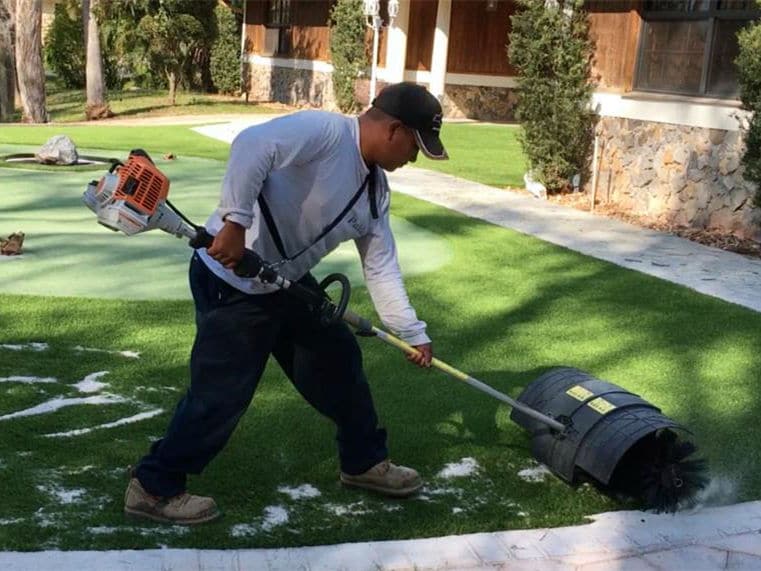
a مكنسة دفع صلبة (شعيرات نايلون)
فرشاة متخصصة للعشب
مكنسة كهربائية للمساحات العشبية الكبيرة
التقنية الصحيحة
فرشاة خلافاً للتيار السائد (عكس نقص الألياف)
فرشاة اتجاهات متعددة للحصول على أفضل رفع
تجنب استخدام الشعيرات المعدنية أو الفرش الصناعية القاسية التي يمكن أن تتلف الخيوط.
4) منع وإزالة البقع (الطعام، الزيت، الصدأ، مواد كيميائية خاصة بالمسابح)
العشب عالي الجودة مقاوم للبقع، لكن البقع لا تزال تحدث - خاصة إذا بقيت السوائل المنسكبة لفترة طويلة.
الاستجابة الأولية (معظم البقع)
قم بإزالة المواد الصلبة بعناية
جفف السوائل (لا تفركها)
اشطف بالماء
للبقع الزيتية أو اللزجة
يستخدم صابون أطباق لطيف مخفف بالماء
افرك بلطف بقطعة قماش ناعمة أو إسفنجة
اشطف جيداً
مصادر البقع الشائعة التي يجب الانتباه إليها
نبيذ، قهوة، مشروبات غازية
واقي الشمس وزيوت الجسم
دهون الطبخ
طلاء / غراء
الصدأ الناتج عن أثاث الحدائق
مواد كيميائية لحمامات السباحة
هام: تجنب استخدام المذيبات القوية إلا إذا أوصى بها المصنع.
5. صيانة مخلفات الحيوانات الأليفة (منع الروائح، وليس مجرد التنظيف)
العشب الصناعي مناسب للحيوانات الأليفة، لكن مناطق الحيوانات الأليفة لا تزال تتطلب شطفًا مناسبًا لمنع تراكم الروائح.
النفايات الصلبة
قم بإزالته فوراً
اشطف المنطقة بعد الاستلام إذا لزم الأمر
البول
يتسرب البول عبر العشب، لكن أملاح البول قد تتراكم في الحشوة بمرور الوقت، مما يسبب روائح كريهة مستمرة.
أفضل الممارسات
اشطف أماكن الحيوانات الأليفة بالماء بانتظام
في الطقس الحار أو عند الاستخدام المكثف، اشطف بشكل متكرر.
إذا ظهرت رائحة كريهة، جرب أحد الحلول التالية:
الخيار أ: محلول الخل
امزج الخل الأبيض والماء بنسبة 1:1
يوضع على المنطقة المصابة
انتظر من 10 إلى 15 دقيقة
اشطف جيداً
الخيار ب: منظف إنزيمي (موصى به)
استخدم منظفًا إنزيميًا مخصصًا للعشب الصناعي
اتبع التعليمات الموجودة على ملصق المنتج
الخيار ج: مزيل روائح العشب
يُطبق هذا التطبيق شهريًا في المناطق التي يكثر فيها استخدام الحيوانات الأليفة.
نصيحة: تنتج الروائح عادةً عن البكتيريا الموجودة في طبقة الحشو. تعمل المنظفات الإنزيمية لأنها حدد مصدر الرائحة, لا مجرد إخفائها.
للحصول على حلول أكثر تفصيلاً، بما في ذلك صودا الخبز، ومواد التنظيف المتخصصة، وميزات العشب الصديقة للحيوانات الأليفة, ، راجع مقالتنا المخصصة:
بول الحيوانات الأليفة على العشب الاصطناعي وكيفية إزالة الرائحة
6) منع مشاكل الحرارة (التبريد + خطر الذوبان)
قد يكون العشب الصناعي ساخناً تحت أشعة الشمس المباشرة، على غرار الأفنية أو الشرفات أو الرمال.
تبريد السطح
رشّ بالماء باستخدام خرطوم للتبريد السريع
إضافة الظل (المظلات، العريشة، الشراع المظلل)
منع التلف الحراري الدائم
قد يذوب العشب الصناعي إذا تعرض لمصادر حرارة عالية.
لا تضعها مباشرة على العشب
شوايات
مواقد النار
الفحم الساخن
ألعاب نارية
السجائر
انتبه لأشعة الشمس المنعكسة
يمكن لبعض النوافذ الحديثة (وخاصة الزجاج منخفض الانبعاثية) أن تعكس ضوء الشمس المركز وتخلق بقعًا ساخنة قوية بما يكفي لإذابة ألياف العشب.
إذا رأيت بقعًا متفحمة:
تحديد مصدر الانعكاس
أضف تظليلًا خارجيًا أو غشاءً/شاشات للنوافذ
7) فحص الحواف والدرزات والصرف (الفحوصات الصغيرة تمنع الإصلاحات الكبيرة)
يساعد الفحص السريع على اكتشاف المشاكل مبكراً.
قائمة فحص شهرية
هل هناك أي حواف مرتفعة؟
هل تنفصل الخياطات؟
هل نسبة الحشو منخفضة في بعض الأماكن؟
هل توجد مشاكل في تصريف المياه (برك مائية)؟
إذا لاحظت حوافًا مرتفعة أو فجوات في اللحامات، فقم بإصلاحها مبكرًا قبل أن يؤدي الازدحام المروري إلى تفاقمها.
المشاكل الشائعة وكيفية الوقاية منها
المشكلة: يبدو العشب مسطحاً / متلبداً
سبب: حركة مرور كثيفة، وهجرة مواد التعبئة، وعدم تنظيف الأرضيات بالفرشاة
يصلح: قم بتنظيف السطح عكس اتجاه ألياف الخشب + أعد توزيع الحشوة
المشكلة: رائحة كريهة في أماكن الحيوانات الأليفة
سبب: تراكم الأملاح والبكتيريا في البول
يصلح: جدول الشطف + منظف إنزيمي + مزيل للروائح
المشكلة: طبقة خضراء / سطح زلق
سبب: الطحالب في المناطق الرطبة/المظللة + تراكم الحطام
يصلح: إزالة الأوساخ + الشطف + تحسين ضوء الشمس/تدفق الهواء
المشكلة: تجمع المياه أو بطء التصريف
سبب: طبقة تصريف مسدودة أو قاعدة ضعيفة
يصلح: قم بإزالة الحطام، وافحص نظام الصرف، واستشر فني التركيب إذا استمرت المشكلة.
المشكلة: بقع ذائبة
سبب: النار/الجمر أو انعكاس النافذة
يصلح: إزالة مصدر الحرارة + استبدال الجزء التالف من العشب
جدول الصيانة الموصى به للعشب الصناعي (بسيط وواقعي)
أسبوعياً (5-10 دقائق)
قم بإزالة الأوراق/الحطام
جمع فضلات الحيوانات الأليفة
اشطف المناطق المخصصة للحيوانات الأليفة أو المناطق المتربة
شهرياً (20-40 دقيقة)
تنظيف المناطق ذات الحركة المرورية العالية
اشطف البقع ونظفها موضعياً
افحص اللحامات/الحواف
ربع سنوي (1-2 ساعة)
قم بتنظيف العشب بالكامل
تنظيف السطح بعمق (خرطوم + منظف معتدل إذا لزم الأمر)
تحقق من مستويات التعبئة (إن وجدت)
افحص منافذ التصريف
ما يجب تجنبه (أخطاء تُقصر عمر العشب)
يتجنب:
مجارف معدنية
فرش سلكية
مواد كيميائية قاسية (مبيضات، مذيبات بترولية)
الغسيل بالضغط العالي من مسافة قريبة
وضع الشوايات/حفر النار مباشرة على العشب
ترك الأوراق مبللة لفترات طويلة
تجاهل انفصال الدرزات حتى يتحول إلى تمزق
خلاصة القول: صيانة منخفضة، عائد مرتفع
يُعد العشب الصناعي استثمارًا طويل الأجل. باتباع روتين بسيط - يتضمن بشكل أساسي إزالة المخلفات، والتنظيف بالفرشاة من حين لآخر، وشطف منطقة الحيوانات الأليفة - يمكنك تجنب جميع مشاكل العشب الشائعة تقريبًا.
السر يكمن في الاستمرارية.
بضع دقائق أسبوعياً تحافظ على مظهر العشب نظيفاً ومستقيماً لسنوات.
التعليمات
كم مرة يجب تنظيف العشب الصناعي بالفرشاة؟
تستفيد معظم الحدائق من تنظيفها بالفرشاة كل بضعة أيام. من شهر إلى ثلاثة أشهر, بينما قد تحتاج المناطق ذات الحركة المرورية العالية إلى التنظيف بالفرشاة كل 2-4 أسابيع.
هل يمكنني غسل العشب الصناعي بضغط الماء؟
نعم، ولكن استخدم ضغط منخفض, حافظ على مسافة آمنة، وتجنب اللحامات/الحواف. الضغط العالي قد يُتلف الألياف ويزيل الحشوة.
كيف أمنع العشب الصناعي من إطلاق رائحة كريهة في وجود الحيوانات الأليفة؟
اشطف بانتظام، واستخدم منظف الإنزيمات عند الحاجة، وفكر في استخدام مزيل روائح العشب في حالة الاستخدام المكثف من قبل الحيوانات الأليفة.
هل يحتاج العشب الصناعي إلى الري؟
ليس للنمو - فقط للتنظيف والتبريد والتحكم في روائح الحيوانات الأليفة.