



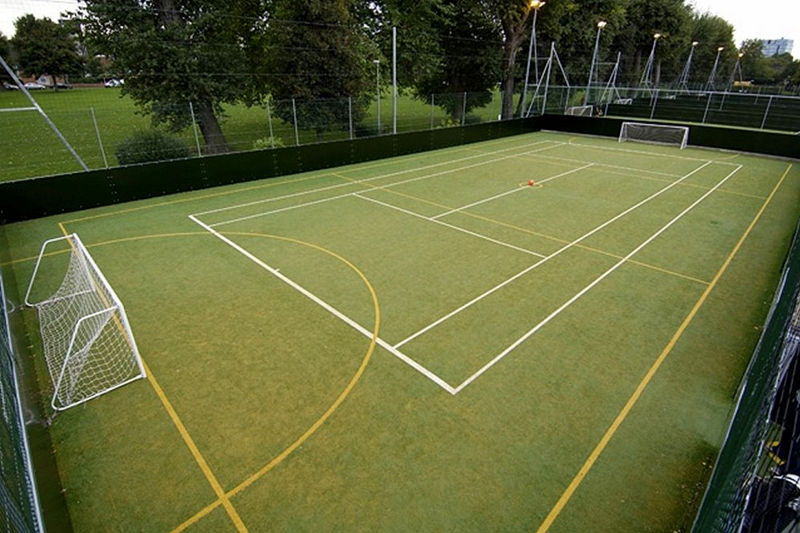
Die Wahl des falschen Padel-Kunstrasens ist ein teurer Fehler – vorzeitiger Faserverschleiß, ungleichmäßiges Ballabsprungverhalten und ein kompletter Austausch des Belags innerhalb von zwei bis drei Jahren. Mit der richtigen Wahl hält ein gut spezifizierter Padel-Belag auch bei intensiver täglicher Nutzung acht bis zwölf Jahre. Dieser Leitfaden erläutert die sechs Spezifikationen, die die Leistung eines Padel-Platzes vom ersten Tag an und seine Langlebigkeit bestimmen.
▼ Auf einen Blick
- Pfahlhöhe von 10–12 mm ist Standard für die meisten Padelplätze, wobei 12 mm die gängigste Spezifikation für kommerzielle und Clubplätze ist.
- Die Faserdicke (Dtex) sollte sein 8.000 Dtex oder höher; Für stark frequentierte Einrichtungen werden 9.000–13.500 Dtex empfohlen.
- KDK-Garn bietet eine deutlich bessere Elastizität und Formbeständigkeit als ATY-Garn und trägt so dazu bei, gleichbleibende Spieleigenschaften über eine längere Lebensdauer zu gewährleisten.
- Hochdichter Rasen (über 50.000 Stiche pro m²) sorgt für gleichmäßiges Ballabsprungverhalten und längere Lebensdauer der Oberfläche.
- Ofengetrockneter Quarzsand (Korngröße 0,2–0,5 mm) ist die richtige Füllmenge – ca. 7–8 kg/m² für KDK-Rasen, 15 kg/m² für konventionelle Oberflächen
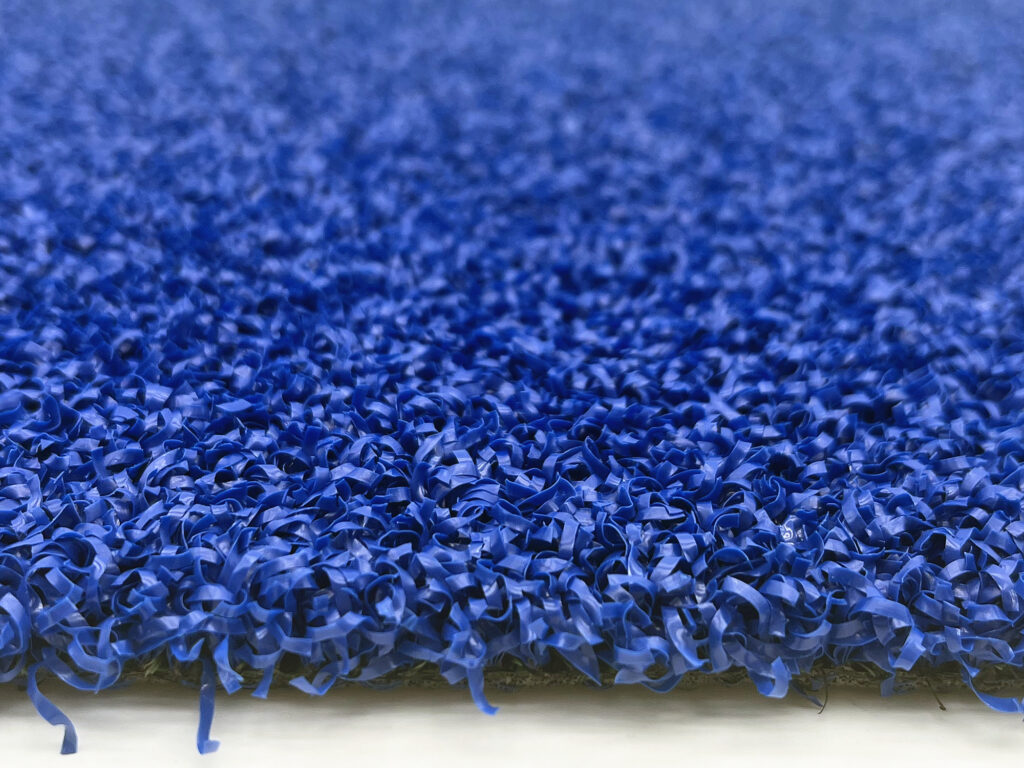
- Blau ist die gängigste Courtfarbe, aber Grün, Rot und Sonderfarben sind ebenfalls erhältlich.
Florhöhe: Der Ausgangspunkt für das Ballverhalten
Die Florhöhe von Kunstrasen für Padelplätze liegt typischerweise zwischen 10 mm und 12 mm, wobei 12 mm die gängigste Spezifikation für kommerzielle und Vereinsplätze ist. Diese geringere Florhöhe trägt zu dem schnellen und vorhersehbaren Ballverhalten bei, das beim Padel erforderlich ist, und bietet gleichzeitig ausreichend Komfort und Haltbarkeit für die Spieler. Sie ist deutlich geringer als die Florhöhe von Fußballrasen (40–60 mm), der für ganz andere Leistungsanforderungen entwickelt wurde.
Eine geringere Florhöhe – etwa 10 mm – ergibt im Allgemeinen eine festere und schnellere Spielfläche mit einem niedrigeren, besser vorhersehbaren Ballabsprung. Manche Anlagen bevorzugen diese Höhe für Wettkampfspiele; sie bietet in der Regel weniger Dämpfung als eine 12-mm-Oberfläche. Für die meisten Vereine mit Spielern unterschiedlicher Spielstärken ist die 12-mm-Oberfläche die vielseitigere Wahl.
Eine höhere Florhöhe kann die Dämpfung und die Interaktion zwischen Ball und Oberfläche leicht verbessern, was zu einer minimal langsameren Oberfläche und einem höheren Ballabsprung führt. Florhöhen über 12 mm sind jedoch bei modernen kommerziellen Padelanlagen weniger verbreitet. Für die meisten kommerziellen Padelanlagen ist eine Florhöhe von 12 mm optimal – sie bietet ein ausgewogenes Spielgefühl für alle Spielstärken, hält die Sandfüllung gut und behält auch nach längerem Gebrauch gleichbleibende Oberflächeneigenschaften.
| Stapelhöhe | Spieleigenschaften | Typische Verwendung |
|---|---|---|
| 10 mm | Schnellere Oberfläche, geringere Sprungkraft, hohe Vorhersagbarkeit – weniger Dämpfung unter dem Fuß | Wettbewerbsorientiertes Spiel und kostensensible Installationen |
| 12 mm | Ausgewogene Geschwindigkeit und Komfort | Die meisten Club- und Gewerbeplätze ✔ |
| 13–15 mm | Mehr Dämpfung, etwas höhere Sprungkraft, weniger verbreitet | Spezielle Anwendungen |
Faserstärke (Dtex): Der Haltbarkeitsfaktor, den die meisten Käufer übersehen
Dtex steht für Decitex – eine Einheit zur Messung des Garngewichts pro 10.000 Meter. Je höher der Dtex-Wert, desto dicker und schwerer die Faser. Beim Padel ist die Faserdicke eine der wichtigsten Spezifikationen, da diese Sportart durch seitliche Gleitbewegungen und Ballaufprall wiederholte, konzentrierte Belastungen auf eine kleine Spielfläche ausübt.
Die Faserspezifikationen für Padelplätze liegen typischerweise zwischen 8.000 und 10.000 Dtex. Je höher der Dtex-Wert, desto dicker die Faser und desto widerstandsfähiger ist sie gegen Abnutzung und Beanspruchung durch Fußgängerverkehr. Fasern mit hohem Dtex-Wert halten häufiger Nutzung und intensivem Wettkampfspiel deutlich besser stand als dünnere Alternativen.
Dünne Fasern – alles unter 7.000 Dtex – werden durch die für Padel typischen seitlichen Gleitbewegungen schnell flach und fransen aus. Ein stark frequentierter Platz mit Kunstrasen niedriger Dtex-Zahl muss daher möglicherweise innerhalb von ein bis zwei Jahren komplett erneuert werden. Die Investition in Fasern mit höherer Dtex-Zahl von Anfang an ist über die gesamte Lebensdauer der Anlage deutlich wirtschaftlicher.
Arturf-Empfehlung: Unser Sortiment an Padel-Kunstrasen reicht von 9.000 Dtex bis 13.500 Dtex – entwickelt für stark frequentierte Anlagen, bei denen die Langlebigkeit der Oberfläche unerlässlich ist.
Garnart: KDK vs. ATY – Warum das für Performance Courts wichtig ist
Nicht alle lockigen Garne sind gleich. Zwei Herstellungsverfahren dominieren den Markt für Padelrasen: ATY (Air Textured Yarn) und KDK (Knit De Knit). Wer den Unterschied kennt, kann sich unter Umständen innerhalb von fünf Jahren einen kompletten Platzaustausch ersparen.
Was ist KDK-Garn?
KDK steht für Knit De Knit – eine Texturierungstechnik, die Ringstrickerei und Hitzefixierung kombiniert. Das Garn wird zunächst zu einem Schlauch gestrickt, dampfbehandelt, um die Kräuselung zu fixieren, und anschließend wieder aufgeribbelt. Das Ergebnis ist ein Garn mit durchgehend stabilen, gleichmäßigen Maschen. Es besteht vollständig aus Polyethylen (PE) und kann mit hohen Dtex-Werten hergestellt werden. Dadurch ergibt sich ein hervorragendes Ballrückprallverhalten und eine dicke, elastische Oberfläche, die keine zusätzlichen Stoßdämpfungspolster benötigt.
Was ist ATY-Garn?
ATY (Air Textured Yarn) wird mithilfe von Luftströmen bei niedrigen Temperaturen hergestellt. Es ist kostengünstiger in der Produktion und wird häufig für Padel-Oberflächen im Einsteiger- und Freizeitbereich verwendet. Allerdings ist ATY-Garn weniger elastisch als KDK – die Fasern verlieren bei regelmäßiger Nutzung allmählich ihre Kräuselung, und die Oberfläche flacht mit der Zeit ab.
| Eigentum | KDK Garn | ATY Garn |
|---|---|---|
| Produktionsmethode | Ringstricken + Hitzefixierung | Luftstromtexturierung |
| Material | 100% PE | PP/PE-Mischung |
| Formbeständigkeit | Deutlich besser – behält seine Spieleigenschaften über eine längere Lebensdauer bei | Unten – die Fasern verlieren mit der Zeit bei regelmäßiger Verwendung ihre Kräuselung. |
| Widerstandsfähigkeit | Höher – gefüllter und vollständiger | Untere |
| Ballabpraller | Ausgezeichnet, konstant | Anfangs gut, verschlechtert sich mit der Zeit |
| Stoßdämpfer erforderlich | Normalerweise nicht erforderlich | Oft empfohlen |
| Am besten geeignet für | Professionelle und stark frequentierte Einrichtungen | Freizeit- und Budgetplätze |
Für jede Anlage, die regelmäßig bespielt wird – ob Club, Sportzentrum oder Padelhalle – ist KDK-Garn die richtige Wahl. Die höheren Anschaffungskosten werden durch die deutlich längere Lebensdauer der Oberfläche und die über Jahre hinweg gleichbleibenden Spieleigenschaften mehr als wettgemacht.
Rasendichte: Mehr Stiche, bessere Leistung
Die Dichte bezieht sich auf die Anzahl der Faserbüschel pro Quadratmeter. Kunstrasen mit hoher Dichte – etwa 50.000 bis 55.000 Stiche pro m² – bietet eine bessere Haltbarkeit, verbesserte Spieleigenschaften und eine längere Lebensdauer als Alternativen mit geringerer Dichte.
Eine höhere Dichte bietet drei messbare Vorteile auf einem Padelplatz. Erstens verbessert sie die Ballabsprungkonstanz – die Oberfläche reagiert unabhängig vom Landepunkt des Balls gleich. Zweitens hält sie das Füllmaterial gleichmäßiger, wodurch der Platz länger in optimalem Zustand bleibt und die Wartungsintervalle kürzer sind. Drittens beugt sie dem Abflachen in stark frequentierten Bereichen wie den Aufschlagzonen und dem Mittelgang hinter dem Netz vor, wo der größte Verschleiß auftritt.
Bei der Beurteilung der Rasendichte eines Lieferanten sollten Sie neben dem Dtex-Wert auch die Stichzahl pro Quadratmeter angeben. Beide Werte zusammen geben deutlich mehr Aufschluss über die tatsächliche Haltbarkeit als jede Angabe allein.
Sandfüllung: Die Komponente, die das System vervollständigt
Kunstrasen für Padel ist ohne die richtige Sandfüllung nicht vollständig. Der Sand muss ofengetrocknet, silikatbasiert, frei von organischen Bestandteilen und auf eine einheitliche Korngröße von 0,2–0,5 mm abgestuft sein. Quarzsand gilt als Standard.
Der Sand erfüllt mehrere Funktionen gleichzeitig: Er stabilisiert die Rasenfasern in aufrechter Position, kontrolliert die Ballabsprunghöhe und Rollgeschwindigkeit, dämpft die Landungen der Spieler und ermöglicht die kontrollierten Gleitbewegungen, die ein grundlegender Bestandteil der Padel-Technik sind.
| Rasenart | Sandauffüllung erforderlich | Körnung |
|---|---|---|
| KDK-strukturierter Kunstrasen | ~7–8 kg/m² | 0,2–0,5 mm |
| Fibrillierter / Monofilament-Rasen | ~15 kg/m² | 0,2–0,5 mm |
Wichtig: Verwenden Sie niemals Bausand oder Strandsand. Unregelmäßige Körnung schädigt die Faserwurzeln und beschleunigt die Oberflächenabnutzung. Nur ofengetrockneter Quarzsand – sauber, rundkörnig und gleichmäßig sortiert – eignet sich als Füllmaterial für Padelrasen.
Farbe: Mehr Auswahl als Sie vielleicht erwarten
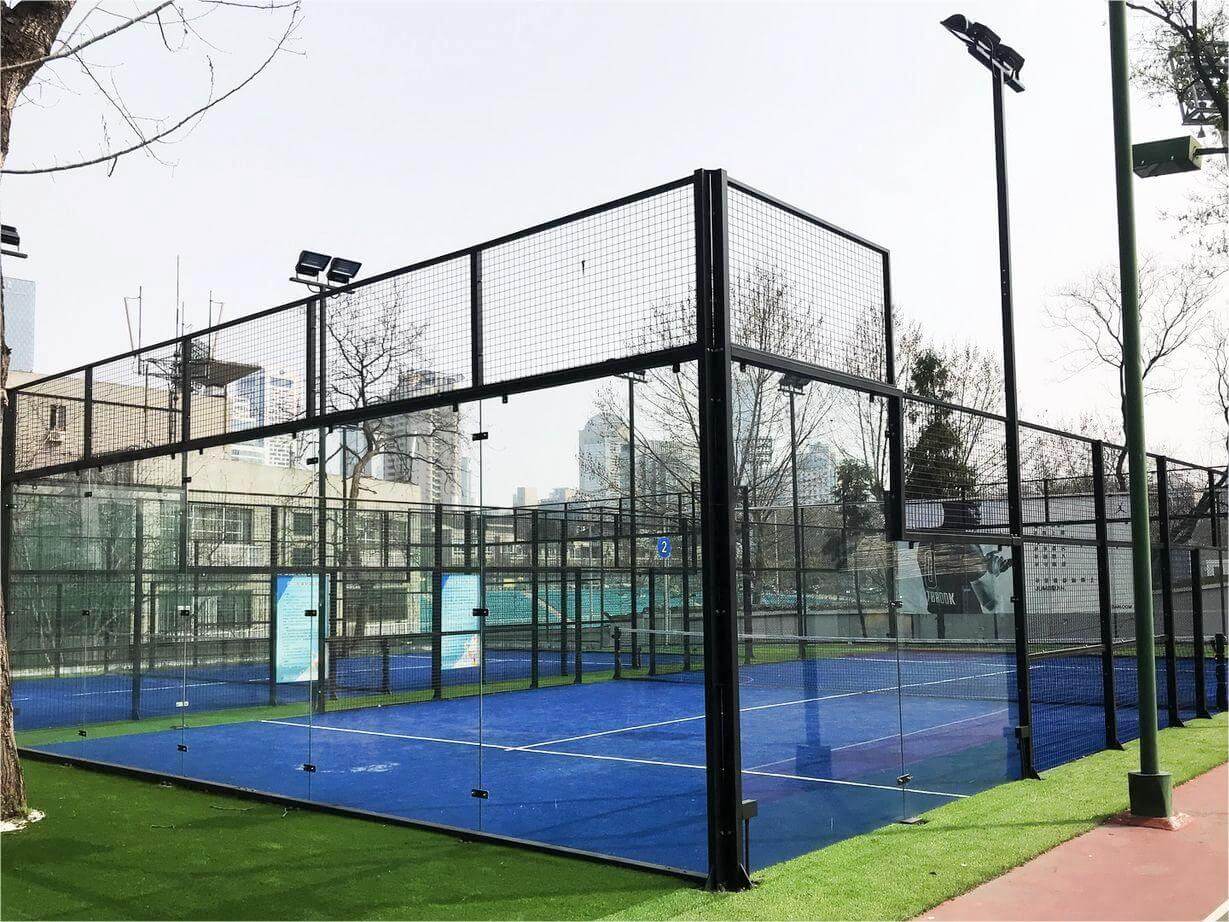
Padel-Oberflächen gibt es in verschiedenen Farben, und laut den Richtlinien der meisten Verbände sollten die Plätze einfarbig und nicht mehrfarbig sein. Blau ist weltweit die vorherrschende Farbe in Profi- und Clubanlagen, da es einen hohen Kontrast zum gelben Ball bietet und ein klares, modernes Erscheinungsbild erzeugt, das sich gut fotografieren und filmen lässt.
Grün, Terrakotta, Rot und Sonderfarben sind bei den meisten Herstellern erhältlich. Die Farbwahl ist in erster Linie eine ästhetische und markenbezogene Entscheidung – sie hat keinen Einfluss auf die Spieleigenschaften. Falls Ihre Plätze für Wettkämpfe oder Turniere genutzt werden sollen, vergewissern Sie sich vor der Bestellung, dass die gewählte Farbe den Anforderungen Ihres zuständigen Verbandes entspricht.
Bei Arturf bieten wir Padelrasen in Blau, Grün, Rot und auf Anfrage auch in anderen Farben an. Sonderfarben sind ab einer Mindestbestellmenge erhältlich.
Häufig gestellte Fragen
Welche Florhöhe ist optimal für einen Padelplatz?
Die meisten kommerziellen und Club-Padelplätze verwenden eine Florhöhe von 10–12 mm, wobei 12 mm die gängigste Spezifikation ist. Ein kürzerer Flor – um die 10 mm – ergibt eine festere und schnellere Spielfläche mit geringerem Ballabsprung und wird sowohl bei wettkampforientierten als auch bei kostenbewussten Anlagen eingesetzt. Er bietet im Allgemeinen weniger Dämpfung als eine 12-mm-Oberfläche. Für die meisten Anlagen, die von Spielern unterschiedlicher Spielstärken genutzt werden, bietet eine Florhöhe von 12 mm die beste Balance aus Spielbarkeit, Komfort und Haltbarkeit.
Welchen Dtex-Wert sollte Padelrasen haben?
Für Padelplätze, die regelmäßig oder stark frequentiert werden, wird eine Mindestfeinheit von 8.000 Dtex empfohlen. Für professionelle Anlagen und stark frequentierte Einrichtungen liegt der Bereich zwischen 9.000 und 13.500 Dtex. Fasern mit niedriger Dtex-Zahl (unter 7.000 Dtex) verschleißen unter den für Padel typischen seitlichen Bewegungen und dem wiederholten Ballaufprall schnell und müssen auf einem stark frequentierten Platz möglicherweise bereits nach ein bis zwei Jahren ausgetauscht werden.
Was ist KDK-Garn und warum ist es beim Padel-Tennis wichtig?
KDK-Garn (Knit De Knit) wird durch ein Ringstrick- und Thermofixierungsverfahren hergestellt, wodurch stabilere und elastischere gekräuselte Fasern als bei herkömmlichem ATY-Garn (Air Textured) entstehen. KDK-Garn bietet im Allgemeinen eine deutlich höhere Elastizität und Formbeständigkeit als ATY und trägt so zu gleichbleibenden Spieleigenschaften über eine längere Lebensdauer bei. Für Padelplätze mit regelmäßiger, täglicher Nutzung ist KDK-Garn die empfohlene Spezifikation.
Welche Art von Sand sollte zum Befüllen eines Padelplatzes verwendet werden?
Für Padelplätze eignet sich ofengetrockneter Quarzsand mit einer Korngröße von 0,2–0,5 mm als Füllmaterial. Der Sand muss frei von organischen Bestandteilen und gleichmäßig gekörnt sein. Für KDK-Kunstrasen werden ca. 7–8 kg/m² benötigt, für herkömmliche fibrillierte oder Monofilament-Oberflächen ca. 15 kg/m². Bausand und Strandsand sind ungeeignet – unregelmäßige Kornformen schädigen die Faserwurzeln mit der Zeit.
Wie lange hält Padelrasen?
Ein hochwertiger Padel-Belag – mit über 8.000 Dtex-Fasern, KDK-Garn, hoher Dichte, korrekter Sandfüllung und regelmäßiger Pflege – hält bei mittlerer bis starker Beanspruchung 8 bis 12 Jahre. Ein minderwertiger Kunstrasen mit dünnen Fasern und unzureichender Sandfüllung muss auf einem stark frequentierten Platz unter Umständen schon nach zwei bis drei Jahren ausgetauscht werden.
Hat die Farbe des Padelrasens Einfluss auf die Leistung?
Nein – die Farbe ist eine rein ästhetische Entscheidung und hat keinen Einfluss auf Ballabsprung, Griffigkeit oder Haltbarkeit der Oberfläche. Blau ist aufgrund des hohen Kontrasts zum gelben Ball die gängigste Wahl. Grün, Rot und Sonderfarben sind ebenfalls erhältlich. Bitte klären Sie die Farbbestimmungen mit Ihrem zuständigen Verband ab, wenn Sie den Ball im Wettkampf einsetzen möchten.
Den richtigen Padel-Kunstrasen für Ihr Projekt auswählen
Die Wahl des richtigen Padel-Kunstrasens sollte nicht allein vom Preis abhängen. Faserstärke, Garnart, Dichte und Füllsystem bestimmen gemeinsam, wie sich der Platz am ersten Tag spielt – und wie er sich auch nach drei, fünf und zehn Jahren noch verhält. Eine Oberfläche, die bei der Verlegung identisch aussieht, kann sich in Leistung und Lebensdauer aufgrund von Eigenschaften, die mit bloßem Auge nicht erkennbar sind, dramatisch unterscheiden.
Wenn Sie einen Padelplatz planen – sei es für einen Club, ein Sportzentrum, ein Investitionsprojekt oder eine Wohnanlage –, kann Ihnen das Team von Arturf hinsichtlich der richtigen Rasenspezifikation für Ihre Nutzungsintensität, das Klima und Ihr Budget beraten. Kontaktieren Sie uns oder Sehen Sie sich unser Padel-Kunstrasen-Sortiment an Um loszulegen.